The Friends Made Along The Way
- dpad200x
- Dec 11, 2025
- 8 min read


As with any journey, especially those of self discovery, the true value lies not in the destination, but in the friends we make along the way. In the spirit of that, I want to dedicate today's post to the myriad of characters that I feel stood out for me. Whether they be characters that prove to be more than the sum of their parts, exceedingly well written, or simply characters that left me feeling like a blushing schoolboy, the following is a non-comprehensive list of my favorite characters from the games I played this year.
Dorian Pavus (Dragon Age: Inquisition)
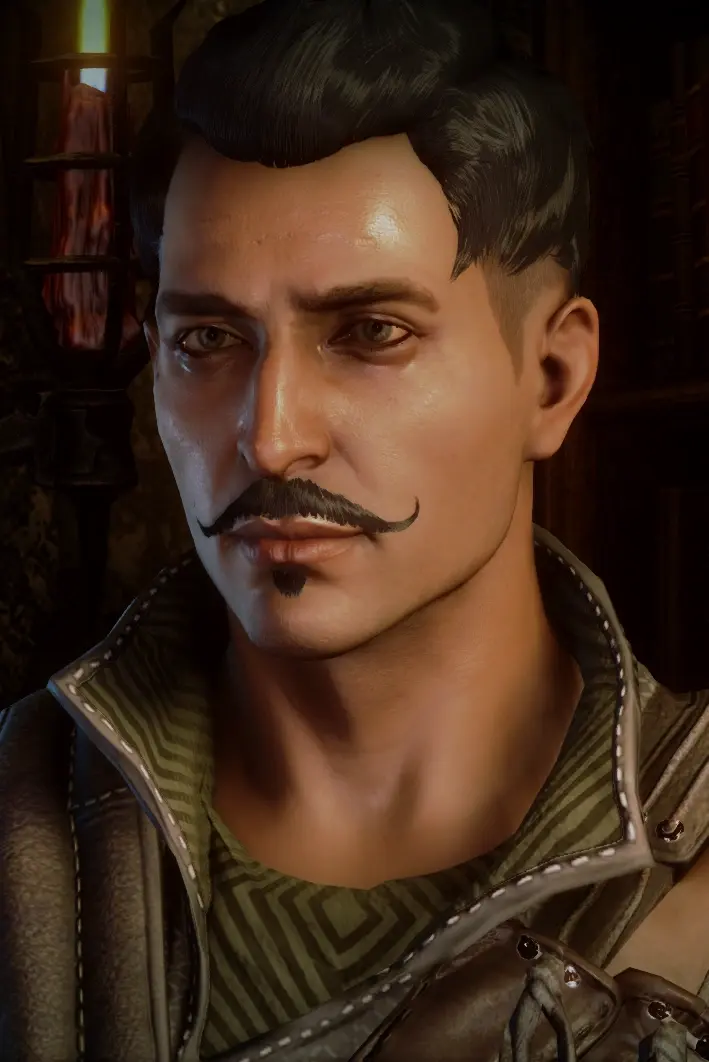
Going into Inquisition more than a decade late, I had quite a few things spoiled for me at the outset, not the least of which was the community's love and adoration for Dorian. I knew that he was a mage, and that his sexuality played a large part in who he is, but I assumed the praise heaped upon him was overblown. It was not. The quest that introduces him, if you choose to side with the mages, was already enough to make him memorable as his quick wit leaves a good first impression. However, what truly sold him for me was how he reacted in the aftermath. One of the fun, if sadly underutilized mechanics in the game is the ability to take people prisoner and then, as the Inquisitor, act as judge and jury for their crimes. I went in playing a mage, and having played the first two games multiple times, felt I had a pretty good grasp on how magic worked. When the time came to sentence the mage behind the events that brought Dorian to the group, the choices presented were to kill him, keep him imprisoned, or to cut off his ties to magic, making him Tranquil. Thinking an option to leave him alive yet not a threat to be the merciful thing, I chose to make him Tranquil, which Dorian had some strong opinions on. He called me out, asking how I, as a mage, could ever consider doing such a thing and saying it would have been more merciful to kill him. This unexpected response (in hindsight, it was more than obvious) caught my attention.
What followed from there was the beginning of a slow burn friendship, one in which Dorian explained his past and how his experiences shaped him while maintaining his quick wit. Yes, Dorian is gay, and it is a pretty big part of his story, but he's written so richly, feeling much more like a real person that it never felt as though it's what defined him. It shaped him, as all experiences do, and unlike past characters that have their sexuality as a defining feature, he never crossed the line into being a caricature. He felt real, and though I wouldn't have guessed it from seeing his backstory on paper, he became something of a moral compass to me as I played the game.
Sera (Dragon Age: Inquisition)

On the flip-side, the Elven archer and thief Sera made an incredibly poor first impression. She shows up, acting more like a jester and a clown than as someone destined to help save the world. She's bold and brash, though she hides her true self behind a mask of silliness. Still, as I wanted to have a rogue in the party, I found myself gravitating to her over Varric, partially because I had already spent time with Varric in Dragon Age II. Over time, she begins to open up in a more real way, explaining how she joins the Inquisition in order to help the common people. It wasn't until a fateful trip into the Fade that I began to really see her.
In the Fade, we have to fight our way through our worst fears, which for the player manifests as giant spiders, but the other party members can mention what it is they see instead. Sera's comments are chilling, as instead of spiders, she sees nothing. While that may seem to imply that she has no fear, it's made clear that nothingness, the void, isolation itself is her true fear, and she is terrified. We also, at multiple points, get to hear her comment on her dislike of magic. Often overlooked in high fantasy settings, her fear of the arcane is more than justifiable, and holds a mirror up to the primary conflict of the story. She fears magic because it makes sense to fear it, but she rarely seemed afraid of the individual mages that can wield it. This distinction sets her apart from the Templars and the Chantry in a refreshing way.
What truly sold her for me was how, as we get to know her, we learn that one of her hobbies is pranking other party members. Rarely going into the realm of outright terrorizing them, she instead brings a sense of levity in a harrowing time. One of my favorite moments was when she excitedly asked my character, the leader of the Inquisition, to accompany her in her pranks. There's a certain humor to an Elf and a huge, broad shouldered Qunari watching a prank unfold, then looking at one another before running away giggling that was surprisingly wholesome.
Malik Caesar (Tales of Graces f)

Tales of Graces has a relatively small cast of characters and we get introduced to most of them in the painfully long prologue. The first character we meet afterwards is Malik, who serves as Asbel's mentor in the knights. We see early on that, though he follows orders, which leads to us having to fight him at one point, he still retains his own ideals and beliefs. Later, when he joins the group proper, he continues to act as a mentor and, at times, equal parts elder brother and father figure.
What truly makes him stand out, more so than his own backstory, is the refreshing way that he goes against typical anime and JRPG conventions for the older male in a group of protagonists. Normally such a character is presented as being lecherous, making inappropriate comments and advances to the female party members, often regardless of age. Malik doesn't do this, instead treating them as actual people. The closest he gets is simply stating facts and trying, often in vain, to act as Asbel's wing man. On top of that, his backstory shows a tragic, sympathetic side to him that makes his actions clear. Yes, I am aware that "not being a pervert" is a depressingly low bar to hold a character to, but it's refreshing to see in addition to his well written story.
Chie Satonaka (Persona 4 Golden)

One of my favorite aspects of Persona 4 is that despite our group of teenagers gaining superhuman powers and being tasked with saving lives, they are still written as being teenagers. While she presents herself as the tough tomboy, we learn early on that Chie is not only insecure about her looks, but she often pushes herself onto others as a way to feel as though she matters. She feels guilty about this, and has to confront this part of herself, but her anxieties and self doubt linger for much of the story. Behind her confidence, we eventually get to see that she is still a teenage girl. In my playthrough, I pursued her as my character's romantic partner, and the dialogue and the way it's delivered revealed a side of her that, frankly, made her feel more real. Whether it be her nervous laugh, her flustered attempts to talk about her feelings, or even just the surprise in her voice as she processes that a guy would choose her, I couldn't help but find this side to her to feel genuine and charming.
Bobby Pin (Date Everything)

When a game gives you over one hundred characters to interact with, there's bound to be one or two that obviously fall into what you consider to be your "type". Sometimes it's the character you most expect, but sometimes you get to learn a little more about yourself. So when I first encountered Bobby Pin, who is checks notes an anthropomorphic bobby pin, I found myself instantly drawn to their design. Short hair? Check. Leather jacket? Check. They seemed to have it all, and I was intrigued. Over the course of speaking with them, it's revealed that they had recently escaped from the vacuum's bag, and having served hard time they were ready to jump back into their usual get rich quick schemes. This is where I learned more about myself. Schemes? Low stakes crimes? A patently ridiculous backstory and an eventual plan to join the circus? I never stood a chance.
Bea Santello (A Night in the Woods)

Okay, look, the borderline goth crocodile girl with a dark sense of sarcasm is already checking off some boxes, but what I truly love about Bea is the slow build of her obvious frustration towards our character, Mae. While other characters express excitement at the news that Mae's taking time away from college and moving back to her hometown, Bea largely remains silent, though she still hangs out with the group. As we learn more about what our friends have been up to since we've been gone, Mae assumes that Bea is still working in her father's hardware store part time. In reality, she's working there beyond the scope of full time, running the day to day operations and all but owning the business. As her frustration bubbles over, we learn that Bea was always a little resentful at the opportunity that Mae had to go to college, and is beyond pissed at how willing she is to throw it away. Unlike how characters who don't go to college are often portrayed, Bea is incredibly smart with a sharp mind and sense of humor who, as she puts it, was dealt a losing hand. Having to stay home to take care of her dad and his business after her mom died, Bea comes off as deeply human, showing a reluctant acceptance of her lack of agency in her own fate.
Lambert (The Witcher 3: Wild Hunt)

As one of only a handful of other Witchers we get to interact with, Lambert paints a stark contrast to the other members of the order and shines a light on the practices of those who came before him. While Vesemir and Eskel come off as being more virtuous, Lambert seems more focused on results and comes off as resentful. In the few missions we get to do with him, he never misses a chance to complain about the Witcher life and takes shots at Geralt. While initially off putting, it's revealed that he, like the others, never had a choice in becoming a Witcher. Taken at a young age as payment for a Witcher saving his father, the training is grueling, to say nothing of the ritual undertaken to give young Witchers their powers. While not excusing his shitty behavior, it paints him in a different light and shows the odd bond he and the others share. While it's easy to point to the drinking scene, which is hilarious in its own right, I was instead sold on Lambert and his relationship to Geralt in a particular boat scene. In a bit of back and forth, Lambert states that he never took Geralt for a poet, prompting Geralt to ask if he wanted to hear a limerick. This back and forth is absolutely amazing and helped solidify how the two feel about each other to me.

Comments